
 EN
EN
Livestock health programs depend on a well-structured approach to disease prevention, and parasite control sits at the center of that approach. veterinary antiparasitic APIs serve as the active pharmaceutical ingredients that power the medications used to protect cattle, sheep, swine, poultry, and other farm animals from internal and external parasites. Without reliable veterinary antiparasitic APIs, the formulations that producers and veterinarians rely on daily would lack the biological activity needed to deliver measurable results.
As global livestock production scales to meet rising protein demand, the role of veterinary antiparasitic APIs becomes even more strategically important. Producers managing large herds face constant pressure from nematodes, trematodes, cestodes, mites, ticks, and protozoan organisms that reduce productivity and increase mortality rates. Integrating high-quality veterinary antiparasitic APIs into structured health programs allows farm managers, veterinarians, and animal health companies to tackle these challenges in a systematic, science-backed way.
The Role of Veterinary Antiparasitic APIs in Disease Prevention
Targeting Parasite Biology with Precision
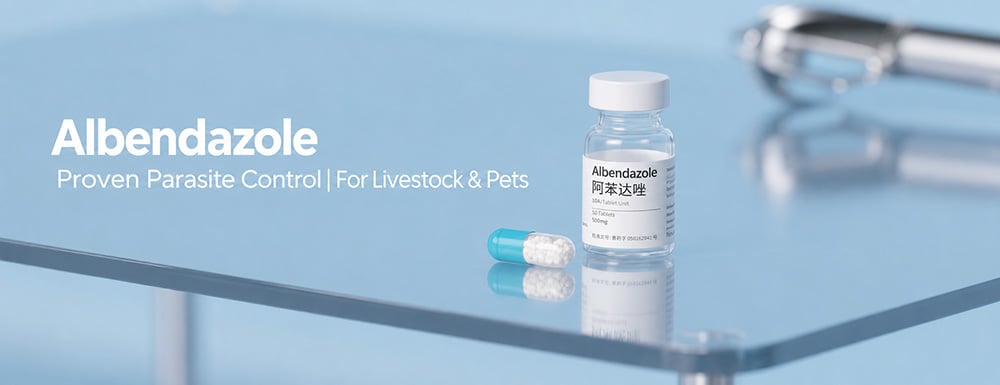
Veterinary antiparasitic APIs work by targeting specific biological mechanisms within parasites. Benzimidazoles such as albendazole, for example, inhibit tubulin polymerization in helminths, effectively disrupting their cellular structure and leading to parasite death. Macrocyclic lactones target glutamate-gated chloride channels in invertebrate nerve cells. Each class of veterinary antiparasitic APIs is designed to act on a distinct pathway, which is why selecting the correct API for a given parasite challenge is critical to treatment success.
When veterinary antiparasitic APIs are matched precisely to the parasite species present in a herd, the therapeutic impact is significantly stronger. Broad-spectrum veterinary antiparasitic APIs like albendazole offer coverage against a wide range of helminths, making them especially practical in mixed-infection scenarios common in intensive farming environments. Narrow-spectrum veterinary antiparasitic APIs may be preferred when targeted intervention is needed to minimize disruption to beneficial microbiota or to reduce selective pressure on specific parasites.
Supporting Preventive Rather Than Reactive Programs
One of the most valuable contributions of veterinary antiparasitic APIs to livestock health programs is their ability to support preventive treatment protocols. Rather than waiting for clinical signs of infestation to appear, modern livestock management programs integrate veterinary antiparasitic APIs into scheduled dosing calendars based on epidemiological data, seasonal parasite pressure, and production phase. This preventive approach reduces the likelihood of subclinical parasite burdens that silently reduce feed conversion efficiency and growth rates without triggering obvious symptoms.
How Veterinary Antiparasitic APIs Improve Herd-Level Outcomes
Productivity Gains Across Species
The economic case for incorporating veterinary antiparasitic APIs into livestock programs is substantial. In ruminants, controlling gastrointestinal parasites through well-chosen veterinary antiparasitic APIs is associated with improved daily weight gain, better wool quality in sheep, and higher milk yields in dairy cattle. In swine operations, veterinary antiparasitic APIs help reduce Ascaris suum burdens that cause liver condemnations at slaughter and suppress growth performance. Poultry programs benefit from veterinary antiparasitic APIs that address coccidiosis and helminth infestations, both of which compromise feed utilization and flock uniformity.
Veterinary antiparasitic APIs contribute to herd-level outcomes not just through direct parasite elimination but also by reducing the secondary infections that often follow parasite damage to mucosal barriers. When intestinal integrity is compromised by parasites, pathogenic bacteria gain easier access to systemic circulation. By reducing parasite load through effective veterinary antiparasitic APIs, producers indirectly lower their dependency on antibiotics, which aligns with global antimicrobial stewardship goals.
Formulation Flexibility and Delivery Efficiency
Veterinary antiparasitic APIs are available in forms that support diverse delivery methods including oral drenches, injectables, pour-on formulations, and feed additives. This flexibility means that veterinary antiparasitic APIs can be incorporated into livestock programs with minimal handling stress. For large-scale operations where individual animal treatment is impractical, veterinary antiparasitic APIs delivered via medicated feed or water systems allow mass treatment without operational disruption. The bioavailability profile of each veterinary antiparasitic API must be carefully considered when matching the active ingredient to its delivery format.
Quality and Sourcing Considerations for Veterinary Antiparasitic APIs
Purity, Stability, and Regulatory Compliance
The performance of veterinary antiparasitic APIs in final formulations depends heavily on their chemical purity and physical stability. Impurities in veterinary antiparasitic APIs can reduce potency, increase the risk of adverse reactions in target animals, and compromise product shelf life. Manufacturers of veterinary antiparasitic APIs must adhere to stringent quality control standards that include particle size specifications, moisture content limits, and heavy metal thresholds. Regulatory frameworks in most markets require that veterinary antiparasitic APIs used in registered products meet defined pharmacopeial or equivalent standards.
Sourcing veterinary antiparasitic APIs from suppliers who maintain robust quality management systems and can provide complete documentation — including certificate of analysis, regulatory master file references, and stability data — is essential for formulation companies and compounding pharmacies alike. Veterinary antiparasitic APIs that meet these standards reduce the risk of batch failures, regulatory rejections, and reputational damage that can arise from substandard inputs.
Managing Resistance Through API Selection Strategy
Anthelmintic resistance is an increasing concern in livestock production globally, and the strategic use of veterinary antiparasitic APIs plays a direct role in resistance management. Rotating between different classes of veterinary antiparasitic APIs rather than relying on a single active ingredient reduces the rate at which parasite populations develop resistance. Veterinary antiparasitic APIs with different mechanisms of action should be used in sequence or in combination according to flock- or herd-specific resistance monitoring data. This practice extends the productive lifespan of each class of veterinary antiparasitic APIs and preserves their utility for future generations of livestock producers.
FAQ
What types of parasites are targeted by veterinary antiparasitic APIs?
Veterinary antiparasitic APIs target a broad range of organisms depending on their chemical class. Benzimidazole-based veterinary antiparasitic APIs such as albendazole address nematodes, cestodes, and some trematodes. Macrocyclic lactone veterinary antiparasitic APIs target nematodes and ectoparasites including mites and ticks. Coccidiostats represent another group of veterinary antiparasitic APIs that focus on protozoan parasites like Eimeria species in poultry and ruminants. Selecting the correct veterinary antiparasitic APIs depends on accurate parasite identification and local resistance data.
How should veterinary antiparasitic APIs be integrated into a livestock health program?
Integrating veterinary antiparasitic APIs into a livestock health program begins with a thorough parasite risk assessment that considers species, age group, production stage, and regional parasite pressure. Veterinarians and animal health advisors typically design treatment calendars that specify when veterinary antiparasitic APIs should be administered, which delivery format is most practical, and how resistance monitoring will be conducted. Veterinary antiparasitic APIs work most effectively when used as part of a broader biosecurity and nutrition program rather than as standalone interventions.
What quality standards should veterinary antiparasitic APIs meet for use in registered products?
Veterinary antiparasitic APIs used in registered veterinary medicines must typically comply with pharmacopeial monographs or equivalent manufacturer quality specifications. These standards cover purity levels, residual solvent limits, particle size distribution, and microbiological quality. Suppliers of veterinary antiparasitic APIs should be able to provide a complete certificate of analysis, manufacturing site registration details, and stability data that supports the claimed shelf life. Regulatory agencies in major markets require that veterinary antiparasitic APIs used in licensed products are sourced from audited and approved facilities.