High-Performance Acetophenone Materials: Advanced Chemical Solutions for Industrial Applications

All Categories

Get a Free Quote

Our representative will contact you soon.
Email
Name
Company Name
Message
0/1000

acetophenone materials

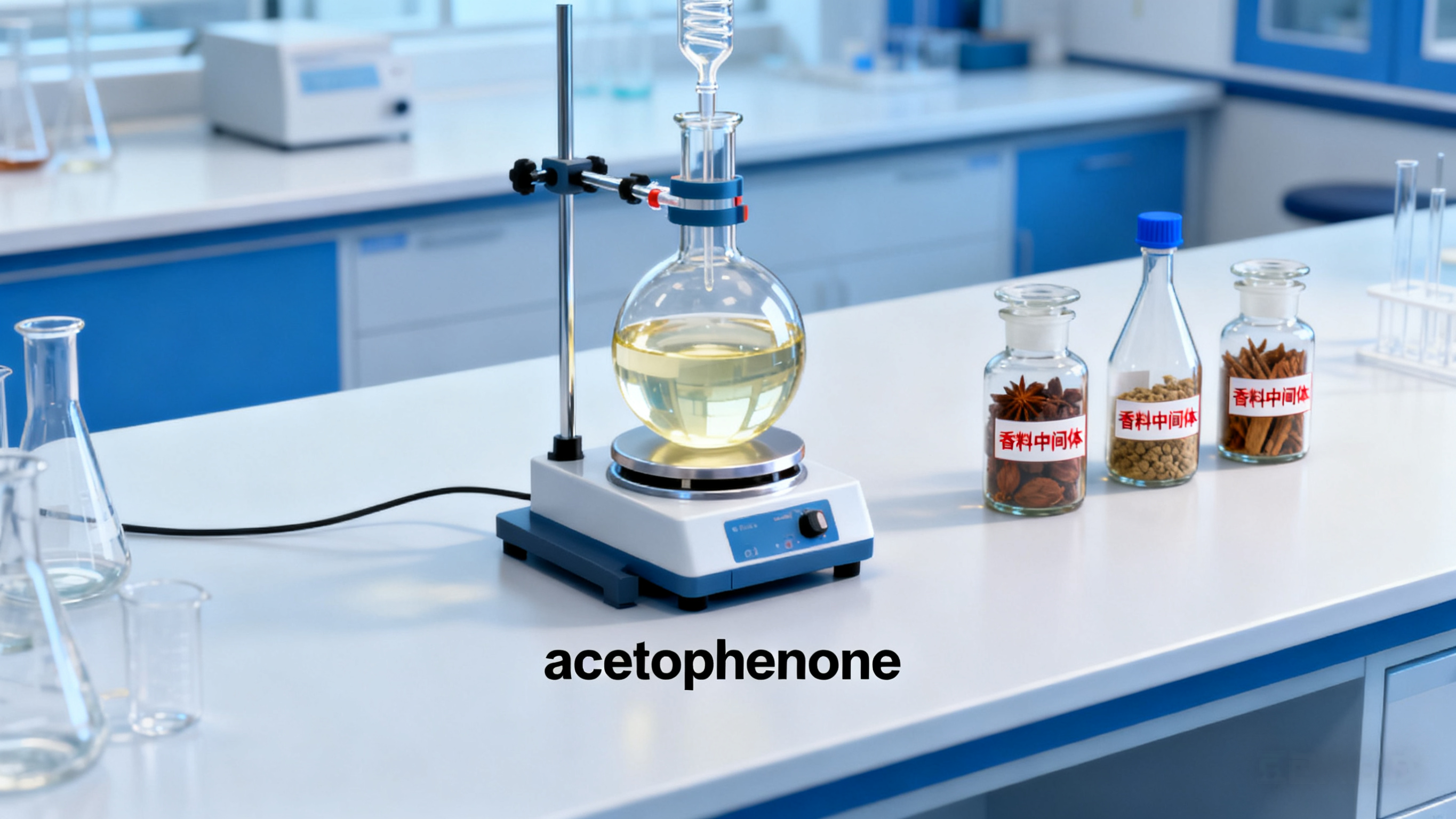
Acetophenone materials represent a cornerstone in modern chemical manufacturing, serving as versatile organic compounds with the molecular formula C8H8O. These aromatic ketone substances exhibit exceptional stability and reactivity, making them indispensable across numerous industrial sectors. The primary function of acetophenone materials centers on their role as intermediate chemicals in pharmaceutical synthesis, fragrance production, and polymer manufacturing. Their unique ketone structure provides excellent solvent properties while maintaining chemical compatibility with various reactive species. Technologically, acetophenone materials demonstrate remarkable thermal stability, with melting points around 20 degrees Celsius and boiling points near 202 degrees Celsius. This temperature range enables precise processing control in manufacturing environments. The materials exhibit excellent miscibility with organic solvents while showing limited water solubility, characteristics that prove advantageous in selective extraction processes. Their aromatic ring structure contributes to enhanced chemical reactivity, particularly in electrophilic aromatic substitution reactions. Applications for acetophenone materials span diverse industries, from pharmaceutical companies utilizing them in drug synthesis to cosmetic manufacturers incorporating them into fragrances and flavor compounds. The textile industry employs these materials in dye production, while the electronics sector uses them in photoresist formulations for semiconductor manufacturing. In polymer science, acetophenone materials function as photoinitiators in UV-curing systems, enabling rapid polymerization processes. The materials also serve as precursors in agrochemical synthesis, contributing to pesticide and herbicide production. Research laboratories frequently utilize acetophenone materials as standard reagents for analytical testing and synthetic pathway development. Their consistent quality and purity levels make them reliable choices for precision applications where reproducible results are essential.


New Products

Acetophenone materials deliver substantial competitive advantages that directly translate into operational benefits for manufacturers and researchers. Cost efficiency represents a primary advantage, as these materials offer exceptional value through their multifunctional properties, eliminating the need for multiple specialized chemicals in many applications. The streamlined procurement process reduces inventory complexity while maintaining high performance standards across diverse production requirements. Processing efficiency stands out as another significant benefit, with acetophenone materials requiring minimal preparation steps before integration into manufacturing workflows. Their stable chemical nature ensures consistent batch-to-batch performance, reducing quality control complications and minimizing production delays. The materials demonstrate excellent shelf stability, maintaining their properties for extended periods when stored properly, which reduces waste and inventory turnover costs. Quality assurance becomes more manageable with acetophenone materials due to their well-characterized properties and standardized production methods. This reliability enables manufacturers to maintain strict quality specifications while reducing testing requirements and associated laboratory expenses. The materials exhibit predictable behavior in various reaction conditions, allowing process engineers to optimize production parameters with confidence. Environmental compliance benefits emerge from the materials' relatively benign nature compared to alternative chemical compounds. Acetophenone materials produce fewer hazardous byproducts during processing, simplifying waste management procedures and reducing disposal costs. Their compatibility with green chemistry principles makes them attractive for companies pursuing sustainability goals without compromising performance standards. Supply chain advantages include widespread availability from multiple suppliers, ensuring consistent access and competitive pricing. The materials' standard shipping classifications simplify logistics and reduce transportation restrictions. Technical support availability from suppliers enhances user experience, providing assistance for application development and troubleshooting. Regulatory compliance becomes more straightforward as acetophenone materials have established safety profiles and documentation, facilitating product approvals and market entry. The materials' versatility reduces the need for extensive reformulation when adapting products for different markets or applications.

Practical Tips

Why Should Firms Partner With Reliable Veterinary API Suppliers?

28

Oct

Why Should Firms Partner With Reliable Veterinary API Suppliers?

The Strategic Value of Quality Veterinary API Partnerships The pharmaceutical landscape for animal health products continues to evolve rapidly, making the selection of veterinary API suppliers a critical decision for pharmaceutical companies. In toda...
View More
Why Are Antiparasitics Drugs Vital for Sustainable Agriculture?

28

Oct

Why Are Antiparasitics Drugs Vital for Sustainable Agriculture?

The Essential Role of Antiparasitic Medications in Modern Farming The agricultural sector faces unprecedented challenges in maintaining livestock health while pursuing sustainable practices. Antiparasitic drugs have emerged as a cornerstone of modern...
View More
What Trends Are Driving Cardiovascular Drug Development?

31

Oct

What Trends Are Driving Cardiovascular Drug Development?

The Evolution of Modern Cardiovascular Medicine The landscape of cardiovascular drug development has undergone remarkable transformation in recent decades, reflecting both scientific advances and changing patient needs. From traditional therapies to ...
View More
How Can Cardiovascular Drugs Reduce Heart Disease Risk?

31

Oct

How Can Cardiovascular Drugs Reduce Heart Disease Risk?

Understanding the Impact of Modern Heart Medications The battle against heart disease continues to evolve with breakthrough developments in cardiovascular drugs. These powerful medications have transformed the landscape of cardiac care, offering hope...
View More

Get a Free Quote

Our representative will contact you soon.
Email
Name
Company Name
Message
0/1000

acetophenone materials

Superior Chemical Stability and Thermal Performance

Superior Chemical Stability and Thermal Performance

Acetophenone materials excel in providing exceptional chemical stability and thermal performance characteristics that significantly enhance manufacturing reliability and product quality. The inherent molecular structure of these compounds creates a robust framework that resists degradation under various processing conditions, ensuring consistent performance throughout production cycles. This stability manifests in multiple ways that benefit end users across different industries. Temperature resistance stands as a crucial feature, with acetophenone materials maintaining their chemical integrity across wide temperature ranges commonly encountered in industrial processes. The materials resist thermal decomposition up to elevated temperatures, allowing manufacturers to operate at optimal processing conditions without concerns about material degradation. This thermal stability translates into reduced maintenance requirements, as equipment experiences less corrosive exposure and operational stress. The chemical inertness of acetophenone materials toward common industrial chemicals prevents unwanted side reactions that could compromise product quality or create safety hazards. This compatibility extends to acids, bases, and various organic solvents, providing flexibility in formulation design and process optimization. Manufacturers benefit from reduced contamination risks and improved batch consistency when incorporating these materials into their production systems. Oxidation resistance represents another critical stability feature, as acetophenone materials demonstrate remarkable resistance to atmospheric oxygen under normal storage and handling conditions. This characteristic extends shelf life significantly, reducing inventory losses and ensuring material quality remains consistent over time. The materials maintain their efficacy even after prolonged exposure to air, humidity, and moderate temperature fluctuations typically encountered in warehouse environments. Light stability further enhances the practical value of acetophenone materials, as they resist photodegradation that commonly affects other organic compounds. This property proves particularly valuable in applications where materials may be exposed to UV radiation or bright lighting conditions during processing or end use. The photostability ensures color consistency and prevents the formation of degradation products that could affect performance or appearance.
Exceptional Solvent Properties and Miscibility Control

Exceptional Solvent Properties and Miscibility Control

Acetophenone materials demonstrate remarkable solvent properties and miscibility control capabilities that provide manufacturers with unprecedented flexibility in formulation design and process optimization. These materials exhibit selective solubility characteristics that enable precise separation and purification processes while maintaining excellent compatibility with various chemical systems. The unique molecular structure creates an optimal balance between polar and nonpolar interactions, resulting in versatile dissolution properties that benefit numerous applications. Selective extraction capabilities represent a primary advantage, as acetophenone materials can effectively dissolve target compounds while leaving unwanted materials behind. This selectivity reduces purification steps and improves overall process efficiency in pharmaceutical manufacturing, where purity requirements are stringent. The materials enable manufacturers to achieve higher yields with fewer processing stages, directly impacting production costs and time-to-market considerations. Phase separation control becomes highly manageable with acetophenone materials due to their predictable miscibility behavior with different solvent systems. This characteristic allows process engineers to design extraction and separation procedures with confidence, knowing that phase boundaries will remain stable and reproducible. The materials facilitate clean separations without forming emulsions or other problematic interfacial phenomena that complicate downstream processing. Viscosity modification represents another valuable property, as acetophenone materials can adjust solution viscosity to optimal levels for various processing requirements. This capability proves essential in coating applications, where precise viscosity control determines film quality and application characteristics. Manufacturers can fine-tune their formulations to achieve desired flow properties without compromising other performance parameters. Compatibility enhancement extends to polymer systems, where acetophenone materials serve as effective compatibilizers between otherwise immiscible components. This function enables the development of advanced composite materials with superior mechanical properties and processing characteristics. The materials facilitate uniform dispersion of fillers and additives, resulting in more consistent final products with improved performance profiles. Cleaning efficiency benefits emerge from the excellent solvent properties of acetophenone materials in industrial cleaning applications. The materials effectively remove organic residues and contaminants while being gentle enough to preserve sensitive substrate materials.
Versatile Photoinitiator Performance and UV-Curing Excellence

Versatile Photoinitiator Performance and UV-Curing Excellence

Acetophenone materials showcase exceptional photoinitiator performance and UV-curing excellence that revolutionize polymer processing and enable advanced manufacturing techniques across multiple industries. These materials demonstrate superior light absorption characteristics and efficient radical generation, making them indispensable for modern photopolymerization applications. The photoactive properties of acetophenone materials create new possibilities for rapid processing and precision manufacturing that traditional thermal curing methods cannot achieve. Light absorption efficiency stands out as a defining characteristic, with acetophenone materials exhibiting strong absorption in the UV spectrum commonly used for industrial curing applications. This efficient light utilization translates into faster curing times and reduced energy consumption, providing both economic and environmental benefits. Manufacturers can achieve complete polymerization with lower UV lamp power requirements, extending equipment life while reducing operational costs. The materials respond effectively to various UV wavelengths, providing flexibility in equipment selection and process design. Radical generation kinetics represent another crucial advantage, as acetophenone materials produce free radicals rapidly and efficiently upon UV exposure. This fast initiation enables manufacturers to achieve high-speed processing with excellent cure uniformity throughout the polymer matrix. The controlled radical generation prevents over-initiation while ensuring complete conversion, resulting in optimal mechanical properties and minimal unreacted species in final products. Surface cure quality becomes exceptional with acetophenone materials due to their ability to function effectively in oxygen-containing atmospheres. Unlike many photoinitiators that suffer from oxygen inhibition, these materials maintain excellent surface cure properties even without inert gas blanketing. This characteristic simplifies processing requirements and reduces production complexity while maintaining superior quality standards. Depth of cure capabilities extend significantly with acetophenone materials, allowing manufacturers to cure thick sections uniformly without compromising surface properties. The materials penetrate effectively into polymer matrices, ensuring complete conversion throughout the entire thickness range. This deep-cure ability eliminates the need for multiple processing steps or specialized techniques to achieve uniform crosslinking in thick applications. Formulation versatility becomes enhanced as acetophenone materials demonstrate excellent compatibility with various monomers, oligomers, and additive systems used in UV-curable formulations.

Get a Free Quote

Our representative will contact you soon.
Email
Name
Company Name
Message
0/1000