
 EN
EN
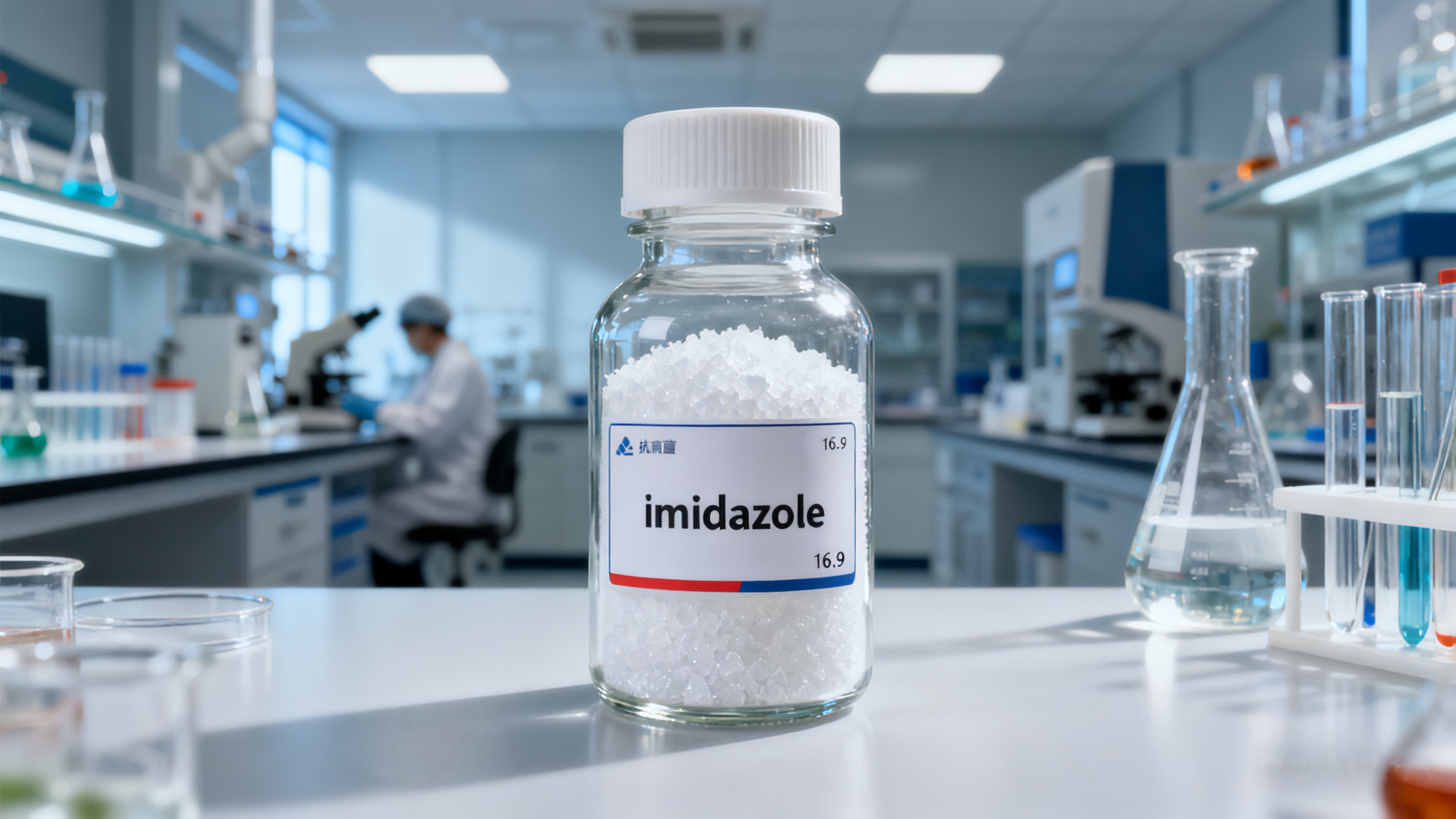
Sourcing imidazole for production is a decision that carries significant weight in pharmaceutical, agrochemical, and specialty chemical manufacturing. Unlike commodity raw materials where price alone drives selection, imidazole procurement demands a thorough evaluation of quality parameters, supply chain reliability, regulatory compliance, and technical suitability. Buyers who rush this process often encounter downstream problems — from batch failures to regulatory audit findings — that are far more costly than the initial savings they hoped to achieve.
This guide addresses the specific checks that experienced procurement professionals and quality teams should perform before committing to a supplier of imidazole for production use. Whether you are qualifying a new source for the first time or re-evaluating an existing one, understanding what to look for — and why each factor matters — gives your organization a clear framework for making a sound sourcing decision. The stakes are high, and a structured approach to supplier assessment always pays off in the long run.
Understanding Purity Requirements for Imidazole in Production
Why Purity Grade Directly Affects Your Process Outcome
The purity of imidazole is arguably the single most critical specification buyers must verify before sourcing begins. In pharmaceutical synthesis, even trace impurities can alter reaction yields, interfere with subsequent process steps, or introduce contaminants into the final active pharmaceutical ingredient. For agrochemical intermediates and specialty polymer applications, sub-standard imidazole purity can lead to inconsistent catalyst performance or unwanted side reactions that compromise product quality.
Buyers should request a Certificate of Analysis (CoA) for every production batch and compare the reported assay value — typically expressed as a percentage of imidazole content — against their internal specification threshold. Most production-grade applications require a minimum assay of 99.0% or higher. However, some advanced pharmaceutical applications may require 99.5% or even 99.9% purity, which narrows the pool of qualified suppliers considerably.
It is equally important to understand which analytical method the supplier uses to determine assay. Gas chromatography, high-performance liquid chromatography, and titration methods may yield slightly different values for the same material. Aligning on analytical methodology early prevents disputes during incoming quality inspection and ensures your internal QC team is comparing like with like.
Key Impurity Profiles Buyers Must Examine
Beyond the headline assay figure, a comprehensive impurity profile is essential. Imidazole sourced for production should come with detailed testing for specific impurities, including residual starting materials from the synthesis route, related heterocyclic compounds, heavy metals, and moisture content. Each of these can have distinct consequences depending on the downstream application.
Heavy metal content is a particularly sensitive area for pharmaceutical buyers. Regulatory frameworks such as ICH Q3D set strict permitted daily exposure limits for elemental impurities in drug products. Suppliers who cannot provide elemental impurity data for their imidazole — or who have not validated their manufacturing process against these limits — present a compliance risk that no buyer should accept.
Moisture content is another often-overlooked parameter. Imidazole is hygroscopic, meaning it absorbs moisture from the atmosphere during storage and handling. Elevated water content affects the effective concentration of imidazole in your reaction, which in turn affects stoichiometry and yield. Always confirm that the supplier measures and controls moisture content, and verify that packaging and storage conditions are appropriate for maintaining the specified moisture level during transit.
Evaluating Supplier Documentation and Regulatory Standing
The Documentation Package That Every Serious Supplier Should Provide
A qualified supplier of imidazole for production should be able to furnish a comprehensive documentation package without hesitation. This package typically includes a current Certificate of Analysis, Safety Data Sheet (SDS), Technical Data Sheet, and, for pharmaceutical applications, a Manufacturer's Declaration of Compliance confirming adherence to relevant GMP guidelines. If your downstream product is a registered pharmaceutical, you may also need a Drug Master File (DMF) reference or support for your own regulatory filings.
Buyers should pay close attention to the revision dates on all documentation. An SDS that has not been updated in several years may not reflect current regulatory classifications or hazard communication standards. Similarly, a CoA from a different production lot should never be accepted as representative of a current shipment. Insist on lot-specific documentation for every delivery.
For buyers operating in regulated markets, the supplier's willingness to engage with your regulatory affairs team and respond to technical queries in a timely manner is itself an important qualification criterion. A supplier who is evasive about documentation or slow to respond to technical questions is likely to create problems during customer audits or regulatory inspections down the line.
GMP Certification and Manufacturing Site Audits
If imidazole will be used in the manufacture of pharmaceutical products — whether as a synthesis intermediate, excipient, or reagent — the supplier's manufacturing site should hold valid GMP certification from a recognized regulatory authority. Buyers should verify the scope and current status of that certification, not simply accept a certificate at face value. Certification can lapse, be suspended, or be issued for a different product line than the one being purchased.
Many buyers in pharmaceutical and advanced chemical sectors conduct on-site audits of their imidazole suppliers as part of the qualification process. These audits assess process controls, quality management systems, deviation handling, change control procedures, and environmental monitoring. Even if a full audit is not immediately feasible, a supplier who refuses to allow customer audits or who cannot provide recent third-party audit reports should be treated with caution.
Change notification is another area where supplier discipline matters. Production-grade buyers need to know when their imidazole supplier makes significant changes to the synthesis route, raw material sources, manufacturing equipment, or site of manufacture. A robust change control program with proactive customer notification is a mark of a mature, reliable supplier.
Supply Chain Continuity and Capacity Verification
Assessing Production Capacity Against Your Demand Forecast
Even the highest-quality imidazole is of limited value if the supplier cannot consistently meet your production volumes. Before finalizing a sourcing arrangement, buyers should have a candid conversation with the supplier about their annual production capacity, current utilization levels, and ability to scale if your demand increases. A supplier operating at full capacity with no buffer may struggle to accommodate urgent orders or seasonal demand spikes.

Request information about the supplier's inventory management practices. Do they maintain safety stock of finished imidazole, or do they manufacture strictly to order? For buyers with continuous production schedules, a supplier who manufactures to order with long lead times introduces unacceptable supply risk. Understanding the typical lead time from order placement to delivery — and the variability around that lead time — is essential for your production planning.
It is also worth exploring whether the supplier has multiple manufacturing lines or redundant production facilities. Single points of failure in manufacturing — a single reactor, a single purification column, or a single site — represent supply continuity risks that should be discussed openly. Suppliers who have invested in manufacturing resilience are generally more reliable long-term partners.
Logistics, Packaging, and Cold Chain Considerations
The physical handling of imidazole during transit and storage is a quality issue, not just a logistics issue. Imidazole has a melting point of approximately 89–91°C, and while this means it is a solid at ambient temperatures, its hygroscopic nature and sensitivity to contamination require careful attention to packaging integrity. Buyers should confirm that the supplier uses packaging materials compatible with imidazole's chemical properties and that the sealing method prevents moisture ingress.
For international shipments, the supplier's experience with export documentation, hazardous goods classification, and customs compliance is directly relevant. Delays at customs caused by incomplete or incorrect documentation can disrupt your production schedule and, in some cases, expose the material to temperature or humidity conditions outside its specified storage range. A supplier with a strong track record of international logistics execution reduces this risk considerably.
Buyers should also confirm the shelf life of the imidazole as specified by the supplier, and verify that the remaining shelf life at the time of delivery meets their internal minimum acceptance criteria. Receiving material close to its expiry date creates inventory management challenges and potential waste, both of which have real cost implications for production operations.
Technical Support and Long-Term Supplier Partnership
The Role of Technical Expertise in Imidazole Procurement
Procuring imidazole is not a purely transactional exercise for production buyers. The complexity of its applications — spanning pharmaceutical synthesis, corrosion inhibition, polymer chemistry, and agrochemical production — means that buyers benefit enormously from suppliers who bring genuine technical knowledge to the relationship. A supplier whose team can discuss the chemistry of imidazole in context, understand your application requirements, and proactively flag potential issues is a significantly more valuable partner than one who simply ships product.
Before committing to a supplier, consider how they respond to technical questions during the evaluation process. Do they provide detailed, accurate answers? Do they have application chemists or technical support staff who can engage meaningfully with your R&D or process chemistry teams? This level of engagement often predicts how effectively the supplier will support you when problems arise during production — which, inevitably, they sometimes do.
Technical support also extends to troubleshooting. If a batch of imidazole performs differently from expectation — affecting yield, reaction time, or product quality — you need a supplier who will engage constructively in root cause analysis rather than deflecting responsibility. A history of collaborative problem-solving and transparent communication is one of the best indicators of a supplier you can trust for long-term production sourcing.
Price Stability and Commercial Terms as Qualification Factors
While quality and compliance are the primary filters in imidazole supplier qualification, commercial terms and price stability are legitimate factors in a comprehensive sourcing assessment. Production budgets depend on predictable raw material costs, and suppliers who engage in frequent, unpredictable price changes — particularly when not tied to transparent feedstock cost indices — introduce financial planning challenges that affect the broader manufacturing organization.
Buyers should discuss pricing mechanisms upfront, including whether the supplier offers fixed-price contracts for defined volumes, index-linked pricing, or spot pricing. Each model has different risk profiles, and the right choice depends on your production volume, budget flexibility, and the volatility of imidazole feedstock costs at the time of negotiation. Understanding the supplier's cost structure and the key drivers of imidazole pricing gives buyers a stronger basis for negotiation and longer-term planning.
Payment terms, minimum order quantities, sample availability, and return policies for non-conforming material are all worth clarifying before a formal supply agreement is signed. Suppliers who are straightforward and transparent about commercial terms tend to be more reliable business partners overall, as the same organizational discipline that produces clear commercial practices usually underpins quality management as well.
FAQ
What purity level should buyers require when sourcing imidazole for pharmaceutical production?
For pharmaceutical production, buyers typically require imidazole with a minimum assay of 99.0%, and many applications call for 99.5% or higher. The exact requirement depends on the application, the sensitivity of the downstream synthesis, and the regulatory framework governing the final product. Buyers should define their internal specification clearly and confirm that the supplier's standard production grade meets or exceeds that threshold on a consistent batch-to-batch basis.
Is GMP certification mandatory when sourcing imidazole for production use?
GMP certification is not universally mandatory for all imidazole applications, but it is effectively required when imidazole is used as a pharmaceutical intermediate or in any application subject to regulatory inspection. Even in non-pharmaceutical sectors, GMP-aligned quality systems offer a meaningful quality assurance advantage. Buyers should assess the regulatory requirements of their end product and ensure that their imidazole supplier's quality system is appropriately matched to those requirements.
How can buyers verify that an imidazole supplier has stable supply capacity?
Buyers can verify supply capacity through a combination of direct dialogue with the supplier's sales and operations teams, review of the supplier's manufacturing infrastructure during an on-site audit, and assessment of their historical delivery performance. Requesting references from existing customers who have similar volume requirements is also a practical approach. A supplier who is transparent about capacity utilization, lead times, and contingency plans is generally more trustworthy than one who provides only assurances without supporting evidence.
What documentation should be requested before placing the first production order for imidazole?
Before placing an initial production order for imidazole, buyers should request a current Certificate of Analysis, Safety Data Sheet, Technical Data Sheet, evidence of relevant certifications such as GMP or ISO, elemental impurity data if applicable, and a sample for incoming quality testing. For pharmaceutical applications, a Manufacturer's Declaration of Compliance and information about the supplier's change notification procedures should also be obtained. Having this documentation in hand before the first order protects the buyer from qualification delays and compliance risks later in the production cycle.
Table of Contents
- Understanding Purity Requirements for Imidazole in Production
- Evaluating Supplier Documentation and Regulatory Standing
- Supply Chain Continuity and Capacity Verification
- Technical Support and Long-Term Supplier Partnership
-
FAQ
- What purity level should buyers require when sourcing imidazole for pharmaceutical production?
- Is GMP certification mandatory when sourcing imidazole for production use?
- How can buyers verify that an imidazole supplier has stable supply capacity?
- What documentation should be requested before placing the first production order for imidazole?