
 EN
EN
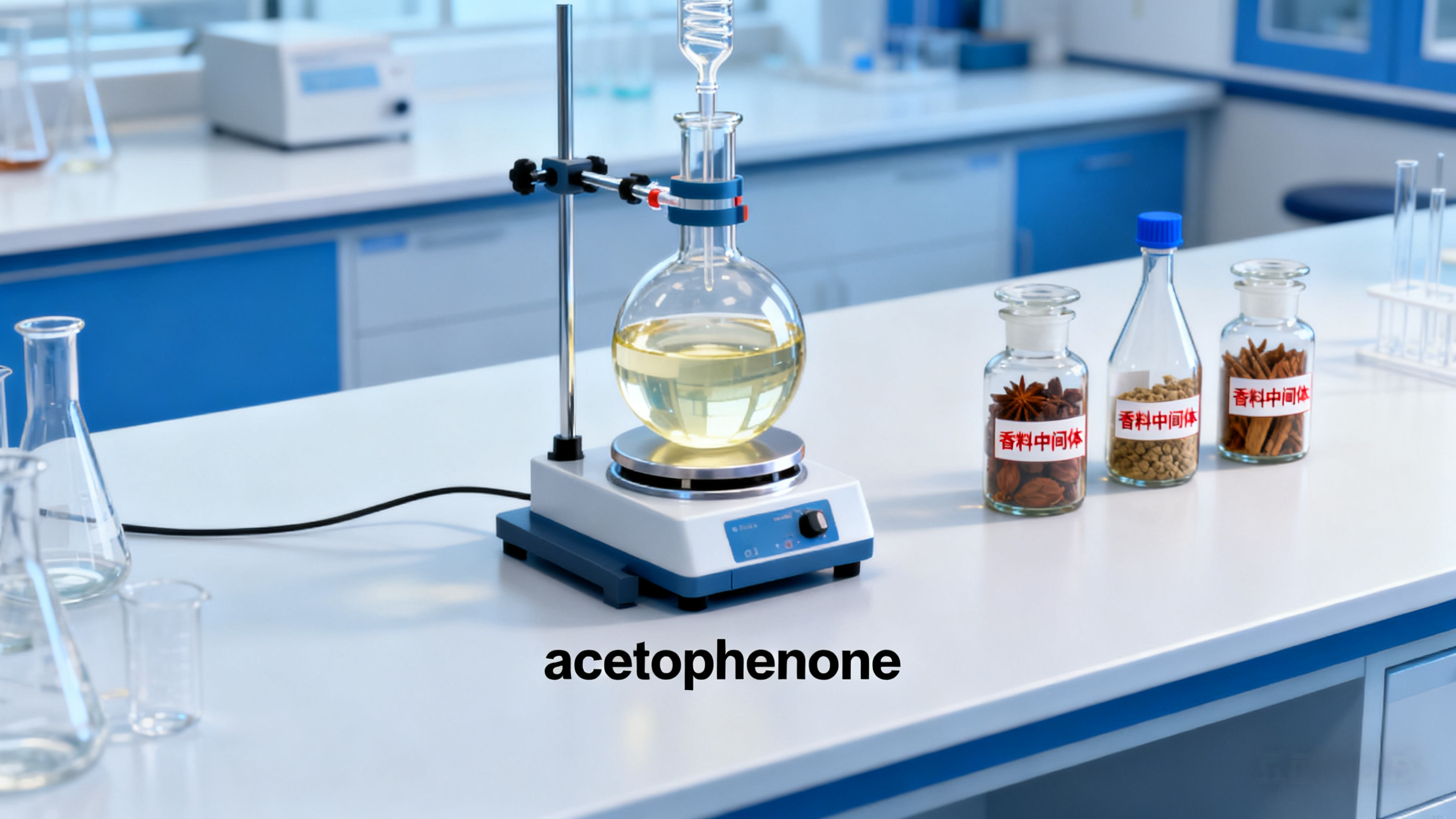
In the world of industrial chemistry, few aromatic ketones command as much practical relevance as acetophenone. Known chemically as methyl phenyl ketone, this colorless to pale yellow liquid carries a distinctive sweet, floral aroma and an impressive array of functional properties that make it indispensable across resin manufacturing, solvent formulation, and specialty chemical synthesis. Whether you are a procurement specialist, a formulation chemist, or a product development engineer, understanding why acetophenone earns its place in these demanding applications is essential for making informed sourcing and processing decisions.
The utility of acetophenone is rooted in its unique molecular architecture — a phenyl group attached to a carbonyl carbon bearing a methyl substituent. This structure grants the compound a balanced polarity, moderate vapor pressure, and strong solvency power that few single-component chemicals can replicate. Across resin chemistry, solvent systems, and high-value specialty intermediates, acetophenone consistently demonstrates a combination of reactivity, compatibility, and processing advantages that justify its presence in modern industrial formulations.
The Role of acetophenone in Resin Chemistry
Compatibility with Polymer Matrices
One of the primary reasons acetophenone is valued in resin work is its excellent compatibility with a wide range of polymer matrices. Its partial polarity allows it to interact effectively with both polar and moderately nonpolar resin systems, including alkyd resins, epoxy formulations, and certain acrylic systems. This broad compatibility reduces the risk of phase separation during blending and ensures a homogeneous final product.
In alkyd resin production, acetophenone can serve as a process solvent during the condensation stage, facilitating viscosity control without introducing reactive impurities that could disrupt the polymerization equilibrium. Its thermal stability at typical resin processing temperatures — often between 150°C and 250°C — ensures that it does not decompose and contaminate the resin batch. This reliability is a significant advantage over lower-boiling solvents that can volatilize prematurely and cause inconsistent product quality.
For formulators working with epoxy systems, acetophenone can function as a reactive diluent carrier or a co-solvent that improves the penetration of curing agents into the resin matrix. Its solvency power helps dissolve solid hardeners and accelerates their dispersion throughout the uncured epoxy, promoting more uniform crosslinking density and ultimately better mechanical properties in the cured part.
Influence on Curing Kinetics and Film Formation
Beyond simple solvency, acetophenone plays a more nuanced role in influencing curing kinetics in certain resin systems. When used in UV-curable coatings and inks, acetophenone itself is a well-established Type I photoinitiator precursor. It undergoes Norrish Type I cleavage upon UV exposure, generating reactive radical species that initiate free-radical polymerization. This photoinitiation capability makes acetophenone not merely a processing aid but an active functional ingredient in UV-cure technology.
The practical consequence for resin formulators is substantial. Using acetophenone as a photoinitiator component reduces the need for additional specialty initiator imports, simplifies the raw material supply chain, and offers a degree of reactivity tunability that many synthetic initiators cannot easily match. The curing speed, depth of cure, and surface finish quality are all influenced by the concentration and purity of the acetophenone used in these systems, making high-purity grades especially important for precision coating applications.
In thermosetting resin work, acetophenone also assists with film formation by acting as a coalescing agent. As the solvent phase evaporates during film drying, acetophenone's moderate boiling point of approximately 202°C ensures it remains present long enough to plasticize polymer chains and allow them to flow together, forming a continuous, defect-free film. This behavior is particularly valuable in industrial coatings applied under variable temperature and humidity conditions.
acetophenone as a High-Performance Solvent
Solvency Power and Selectivity
The solvency characteristics of acetophenone set it apart from common ketone solvents such as acetone or methyl ethyl ketone. Its higher molecular weight and aromatic ring structure give it a Kauri-Butanol value and Hansen solubility parameters that position it well for dissolving resins, waxes, nitrocellulose, cellulose acetate, and a variety of synthetic polymers. Formulators who require a solvent with both good hydrogen bond acceptance and moderate dispersion forces frequently turn to acetophenone as a primary or co-solvent.
In industrial cleaning and degreasing applications, acetophenone's selectivity allows formulators to design solvent blends that dissolve targeted contaminants — such as rosin fluxes, synthetic lubricants, or oligomeric residues — without aggressively attacking the substrate material. This selectivity is difficult to achieve with broad-spectrum solvents and makes acetophenone a preferred component in precision cleaning formulations used in electronics manufacturing and aerospace maintenance.
Another solvency advantage is the compound's relatively low water miscibility, which enables its use in extraction processes where aqueous-organic phase separation is required. In certain pharmaceutical synthesis steps and flavor-fragrance extraction procedures, acetophenone partitions preferentially into the organic phase, carrying target compounds away from aqueous impurities cleanly and efficiently.

Evaporation Rate and Formulation Control
The evaporation rate of a solvent profoundly affects coating appearance, print quality, adhesion, and substrate wetting. Acetophenone's evaporation rate — significantly slower than acetone but faster than many high-boiling aromatic solvents — places it in a practical middle range that gives formulators considerable latitude in designing solvent blends with tailored drying profiles. In gravure and flexographic printing inks, this balance helps prevent solvent popping, misting, and plate drying issues that plague faster-evaporating systems.
In lacquer and varnish formulations, acetophenone's slower evaporation allows the applied film adequate time to level and flow out before skinning begins, resulting in a smoother, glossier surface. This leveling advantage is especially important in high-end wood coatings and metal decorating applications where surface aesthetics are a primary performance metric.
The compound's flash point of approximately 44°C classifies it as a flammable liquid, which requires proper handling infrastructure but is not unusually restrictive by industrial standards. Many solvent-based coating operations already operate with equivalent or stricter fire prevention measures, meaning the integration of acetophenone into existing production environments is typically straightforward from a safety compliance standpoint.
acetophenone in Specialty Chemical Synthesis
Value as a Chemical Intermediate
The carbonyl group in acetophenone is highly reactive toward a range of nucleophiles and electrophiles, making it an exceptionally versatile chemical intermediate in organic synthesis. It is a starting material or key reagent in the production of pharmaceuticals, agrochemicals, fragrances, and polymer additives. The Friedel-Crafts acylation route commonly used to produce acetophenone from benzene and acetic anhydride yields a product that is both commercially scalable and chemically amenable to further transformations.
In pharmaceutical synthesis, acetophenone serves as a precursor to numerous active pharmaceutical ingredients. Its carbonyl group can be reduced to produce 1-phenylethanol, condensed in aldol reactions to form chalcones, or used in Wittig and Grignard reactions to extend carbon chains toward target molecules. The compound's predictable reactivity and high purity availability make it a dependable building block that process chemists can incorporate into multi-step synthetic routes with confidence.
In fragrance chemistry, acetophenone contributes a sweet, floral, cherry-like note that perfumers exploit both directly and as a precursor to more complex aroma molecules. Its derivatives — including various substituted acetophenones — are used to create nuanced fragrance compositions for personal care, household products, and fine perfumery. The consistency and purity of the acetophenone feedstock directly influence the olfactory profile of the finished fragrance, underscoring the commercial importance of sourcing high-grade material.
Role in Polymer Additive and Crosslinker Production
Specialty chemical manufacturers also rely on acetophenone in the production of polymer additives, particularly light stabilizers and antioxidants. Certain hindered amine light stabilizers (HALS) and benzophenone-type UV absorbers are synthesized from acetophenone-derived intermediates, connecting this compound directly to the long-term performance and weatherability of outdoor polymers, coatings, and films.
In crosslinker chemistry, acetophenone-based oxime crosslinkers are widely used in silicone sealants and coatings. These crosslinkers, formed by reacting acetophenone with hydroxylamine, release acetophenone as a byproduct during cure — a characteristic that has driven research into low-emission formulations. Understanding this release mechanism is important for formulators developing products for low-VOC regulatory environments, and it highlights how even the byproduct behavior of acetophenone is chemically informative and industrially relevant.
The synthesis of agrochemical intermediates also frequently involves acetophenone as a building block. Its aryl ketone structure is a common motif in herbicides and fungicides, and the ability to modify the ring and carbonyl positions through well-established organic transformations gives synthetic chemists access to a broad scaffold for biological activity optimization.
Quality, Purity, and Sourcing Considerations
How Purity Affects Performance
The performance of acetophenone in any of the above applications is strongly dependent on its purity grade. Impurities such as benzaldehyde, phenol, or chlorinated byproducts can introduce off-colors, undesirable odors, catalyst poisoning, or reduced reactivity in downstream synthesis steps. For UV-curing applications, even trace-level impurities that absorb in the relevant UV wavelength range can quench the photoinitiation process and dramatically slow cure speeds.
Industrial-grade acetophenone typically carries a purity specification of 99% or higher, with further subdivisions between technical grade and reagent grade products for laboratory and pharmaceutical synthesis work. For fragrance applications, organoleptic testing is often required in addition to chemical purity analysis to confirm that the aroma profile meets the expectations of perfumers and end-product formulators.
Storage and handling conditions also influence effective purity over time. Acetophenone should be stored in tightly sealed containers away from strong oxidizers and direct sunlight. Prolonged exposure to air can cause slow oxidation and discoloration, reducing its suitability for color-sensitive formulations. Proper inventory rotation and container management are therefore important operational practices for facilities that use acetophenone regularly.
Supply Chain and Grade Selection
From a procurement perspective, selecting the appropriate grade of acetophenone requires matching the material specification to the end-use application. Resin and coating formulators generally find that industrial grade material meets their needs, provided it meets color and chloride specifications that could affect coating appearance or substrate compatibility. Pharmaceutical and fragrance customers, by contrast, often require certificates of analysis, GMP compliance documentation, and batch traceability that align with their regulatory obligations.
Packaging options — from drums and intermediate bulk containers to isotanks for large-volume users — should also be considered alongside purity and price when evaluating suppliers. Reliable supply continuity is particularly important for manufacturers whose production schedules depend on consistent acetophenone availability, as substitution with alternative solvents or intermediates is rarely straightforward given the compound's unique functional profile.
FAQ
What industries use acetophenone most extensively?
Acetophenone is most extensively used in the coatings and inks industry as a solvent and photoinitiator component, in the pharmaceutical industry as a synthesis intermediate, in the fragrance industry for its aroma contribution and as a precursor to complex scent molecules, and in the polymer additives sector for the production of UV stabilizers and silicone crosslinkers. Its broad chemical utility means it touches multiple sectors simultaneously.
Is acetophenone safe to handle in industrial settings?
Acetophenone is a flammable liquid with a flash point of approximately 44°C and should be handled with standard precautions applicable to flammable organic solvents. This includes proper ventilation, grounding of containers, exclusion of ignition sources, and use of appropriate personal protective equipment. It is not classified as a highly toxic substance under most regulatory frameworks, but prolonged or repeated skin and inhalation exposure should be avoided in accordance with occupational exposure limits and safety data sheet guidance.
Can acetophenone be used in low-VOC formulations?
Acetophenone's regulatory VOC status varies by jurisdiction. In many markets, it is classified as a VOC, which means its use in high-concentration solvent formulations may be subject to emission restrictions. However, in UV-cure systems where it reacts into the cured film rather than evaporating, its effective VOC contribution can be substantially reduced. Formulators working under strict VOC regulations should assess both the application method and the reactivity of acetophenone in the specific formulation context.
How does acetophenone compare to other ketone solvents in solvency power?
Compared to lower-molecular-weight ketones such as acetone or methyl ethyl ketone, acetophenone offers significantly higher solvency power for heavy polymer resins, waxes, and aromatic compounds due to its aromatic ring and higher molecular weight. It evaporates more slowly and has a higher boiling point, which gives formulators more control over drying profiles. The trade-off is a higher cost per kilogram and stricter handling requirements, making acetophenone most suitable where its specific solvency or reactivity advantages cannot be replicated by simpler alternatives.