
 EN
EN
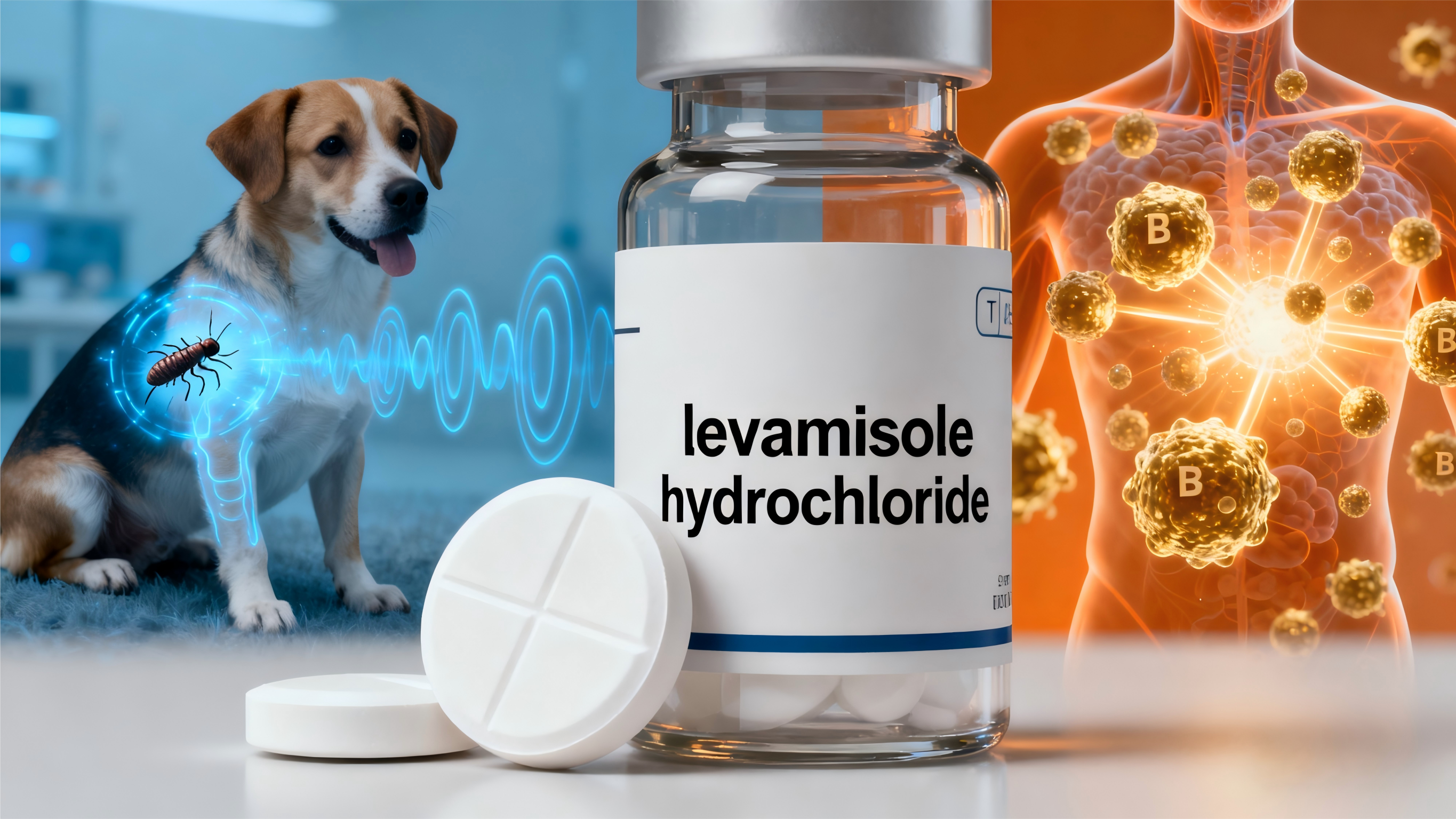
The global market for antiparasitic active pharmaceutical ingredients is under growing pressure. Manufacturers are increasingly asked to broaden their API portfolios, reduce dependency on single-compound supply chains, and respond to regulatory demands for diversified sourcing strategies. Against this backdrop, levamisole hydrochloride has emerged as a compelling candidate for companies seeking to expand their range of parasite-related APIs. Its well-documented pharmacological profile, broad spectrum of activity, and established regulatory history make it a strategically attractive addition for any pharmaceutical manufacturer operating in this space.
This article examines whether levamisole hydrochloride genuinely offers manufacturers a viable pathway to parasite API diversification. The answer, based on chemistry, regulatory standing, market demand, and production considerations, is a qualified yes — but only when approached with a clear understanding of the compound's strengths, limitations, and the strategic conditions under which it delivers the most value. Understanding these factors is essential before committing resources to portfolio expansion in this direction.
The Role of Levamisole Hydrochloride in Antiparasitic Pharmacology
Mechanism of Action and Spectrum of Activity
Levamisole hydrochloride acts primarily as a nicotinic acetylcholine receptor agonist in nematode muscle cells. By binding to these receptors, it causes spastic paralysis in susceptible parasites, which are then expelled from the host organism. This mechanism is distinct from several other anthelmintic compound classes, which makes levamisole hydrochloride particularly valuable from a resistance-management perspective and from a portfolio differentiation standpoint.
The compound demonstrates activity against a range of gastrointestinal nematodes, including species relevant to both veterinary and, in certain formulations, human medicine. Its dual application potential — spanning veterinary anthelmintics and certain human health indications — means that a manufacturer producing levamisole hydrochloride as an API can serve multiple downstream market segments with a single compound. This cross-market utility is one of the core arguments in favor of its inclusion in a diversified parasite API portfolio.
Beyond pure anthelmintic use, levamisole hydrochloride has historically been associated with immunomodulatory activity, which has expanded research interest in the molecule. While manufacturers focused strictly on parasite APIs may not pursue these applications directly, the broader scientific interest in the compound supports continued market relevance and potential for differentiated downstream product development by customers.
Chemical Stability and Synthesis Considerations
Levamisole hydrochloride is a relatively stable hydrochloride salt form of levamisole, offering improved solubility and handling characteristics compared to the free base. Its synthesis routes are well-established in the pharmaceutical literature, and the compound has been manufactured at commercial scale for decades. This maturity of synthesis knowledge reduces the technical risk associated with introducing levamisole hydrochloride into an existing API production facility.
From a process chemistry perspective, manufacturers considering this API benefit from access to a rich body of published process optimization data. Yield improvement strategies, purification protocols, and quality control benchmarks are well-documented, meaning that the learning curve for production scale-up is more predictable than it would be for a novel chemical entity. This production predictability is a significant factor when evaluating whether an API is suitable for portfolio diversification without excessive capital risk.
Market Demand and Portfolio Logic for Manufacturers
Veterinary Market Dynamics Driving API Demand
The veterinary pharmaceutical sector remains a primary demand driver for levamisole hydrochloride as an API. Global livestock populations continue to require effective anthelmintic programs, and resistance to other compound classes — including benzimidazoles and macrocyclic lactones — has increased interest in compounds with alternative mechanisms of action. Manufacturers who can supply high-quality levamisole hydrochloride are well-positioned to serve veterinary product formulators seeking diversification in their own therapeutic programs.
Demand from developing and emerging markets is particularly noteworthy. Regions with large ruminant and swine populations, where access to a diverse range of antiparasitic compounds is critical for agricultural productivity, represent significant growth opportunities for levamisole hydrochloride API suppliers. Manufacturers entering or expanding in these markets through levamisole hydrochloride production can simultaneously address both global supply chain resilience goals and regional market access strategies.
Human Health Applications and Regulatory Positioning
In human medicine, levamisole hydrochloride has been used historically for the treatment of certain nematode infections, particularly in regions where such infections remain a public health concern. Although its use in human medicine has declined in some high-income markets, it remains relevant in tropical disease contexts and in certain combination therapy approaches. For API manufacturers, this means that regulatory dossiers and pharmacopoeial monographs for levamisole hydrochloride in human pharmaceutical grade already exist, which simplifies the path to market entry.
Meeting both veterinary and human pharmaceutical grade standards for levamisole hydrochloride requires robust quality management systems, but the reward is access to a wider customer base. Manufacturers who invest in dual-grade capability effectively double the market segments they can serve with a single API, which is the essence of intelligent portfolio diversification. The regulatory familiarity of this compound across multiple jurisdictions also reduces approval timelines compared to novel APIs, offering a faster return on investment.
Strategic Fit for Diversification Goals
Complementarity with Existing Antiparasitic APIs
For manufacturers already producing other antiparasitic compounds such as albendazole, mebendazole, or ivermectin, adding levamisole hydrochloride to the portfolio represents a logical extension rather than a disruptive pivot. The compound complements rather than duplicates the mechanisms covered by these other APIs. Customers — whether veterinary product manufacturers or human pharmaceutical companies — often prefer to source related APIs from a single supplier, making portfolio breadth a competitive advantage in itself.
The complementarity argument also extends to production infrastructure. Manufacturers with existing capabilities in chiral synthesis or alkaloid chemistry may find that the process chemistry required for levamisole hydrochloride aligns well with existing equipment and expertise. This reduces the marginal cost of adding the compound relative to introducing a structurally unrelated API, which strengthens the business case for diversification through this specific molecule.
Risk Considerations and Conditions for Success
Diversification through levamisole hydrochloride is not without conditions. The compound's market is mature in certain geographies, which means that price competition can be intense. Manufacturers entering primarily on the basis of cost advantage must have a clear strategy for sustainable margin management. Those who differentiate on quality, regulatory documentation breadth, or technical service — rather than price alone — are better positioned to build durable customer relationships around this API.
Supply chain reliability is another consideration. Customers seeking to diversify their own antiparasitic API sourcing will only value a new supplier if that supplier can demonstrate consistent quality and supply continuity. Manufacturers considering levamisole hydrochloride production must therefore invest not only in synthesis capacity but also in robust quality systems, regulatory compliance infrastructure, and supply chain transparency to win and retain business from discerning pharmaceutical customers.
Production Scale and Quality Standards for API Manufacturers
GMP Compliance and Regulatory Documentation
Any manufacturer producing levamisole hydrochloride for pharmaceutical use must operate under current Good Manufacturing Practice frameworks. Whether targeting markets regulated by the US FDA, EMA, or other national authorities, GMP compliance is the baseline expectation. The good news for manufacturers evaluating this API is that levamisole hydrochloride appears in multiple official pharmacopoeias, including the United States Pharmacopeia and the European Pharmacopoeia, providing clear quality standards and well-defined analytical test methods.
Regulatory documentation requirements — including Drug Master Files or equivalent submissions — are well-understood for levamisole hydrochloride. Experienced API manufacturers can prepare these submissions efficiently, leveraging existing templates and regulatory expertise. For companies newer to antiparasitic API production, engaging regulatory affairs consultants familiar with the specific requirements for this compound class can accelerate market entry without compromising compliance quality.
Analytical Control and Impurity Profiling
Controlling impurity profiles is critical for levamisole hydrochloride produced for pharmaceutical use. Given that the compound is the hydrochloride salt of a chiral molecule — specifically the levo-enantiomer of tetramisole — manufacturers must maintain strict chiral purity controls to ensure that the product meets the specifications required by pharmaceutical customers. Any significant presence of the dextro-enantiomer would constitute a critical quality failure that could compromise a customer's product approval.
Investing in appropriate analytical instrumentation — including high-performance liquid chromatography with chiral column capability — is therefore a prerequisite for credible levamisole hydrochloride API manufacturing. Manufacturers who build analytical rigor into their production programs from the outset will find that this investment pays dividends not only in product quality but also in customer confidence, which is the foundation of long-term commercial relationships in the pharmaceutical API sector.
Evaluating the Business Case for Portfolio Expansion
Alignment with Long-Term Antiparasitic Market Trends
Antiparasitic resistance is a documented and growing challenge across both human and veterinary medicine. As resistance to other compound classes spreads, interest in levamisole hydrochloride as a mechanistically distinct alternative is likely to remain steady or increase. This resistance-driven demand dynamic provides a degree of long-term market stability that makes investment in levamisole hydrochloride production less speculative than entry into markets dependent on a single driver such as novelty or short-term regulatory exclusivity.
Manufacturers with a long-term strategic horizon will recognize that levamisole hydrochloride occupies a durable niche within the antiparasitic API landscape. Its role in rotation therapy protocols — where different compound classes are cycled to manage resistance — ensures ongoing demand even in markets where the compound has been available for many years. This resistance-management rationale is increasingly supported by veterinary and human health guidelines, providing manufacturers with a scientifically credible market positioning narrative.
Customer Value Proposition and Commercial Differentiation
For API manufacturers, the strongest commercial case for adding levamisole hydrochloride to a parasite API portfolio rests on the value it delivers to customers. Customers who source multiple parasite APIs from a single qualified supplier benefit from simplified vendor qualification processes, consolidated regulatory documentation, and more efficient technical support relationships. By offering levamisole hydrochloride alongside other antiparasitic APIs, manufacturers can increase their strategic importance to key customers and reduce the risk of being displaced by a competitor who offers a more complete portfolio.
This 'portfolio stickiness' effect is a well-recognized phenomenon in B2B pharmaceutical ingredient markets. When a supplier becomes the preferred source for three or four related APIs rather than just one, the cost of switching for the customer rises substantially. Manufacturers who use levamisole hydrochloride as part of a deliberate portfolio expansion strategy — rather than as an isolated product addition — are more likely to capture this customer retention benefit and translate it into sustainable revenue growth.
FAQ
Is levamisole hydrochloride suitable for both veterinary and human pharmaceutical API production?
Yes, levamisole hydrochloride has established pharmacopoeial monographs for both veterinary and human pharmaceutical grades. Manufacturers who invest in dual-grade production capability can serve a broader range of customers across both sectors, which enhances the commercial value of including this compound in a diversified parasite API portfolio.
How does levamisole hydrochloride complement other antiparasitic APIs in a manufacturer's portfolio?
Levamisole hydrochloride operates through a distinct mechanism — nicotinic acetylcholine receptor agonism — that differs from benzimidazoles, macrocyclic lactones, and other anthelmintic compound classes. This mechanistic diversity makes it a genuine complement rather than a duplicate, adding value to customers engaged in resistance management or seeking a single supplier for multiple antiparasitic APIs.
What are the key quality control challenges for manufacturing levamisole hydrochloride as a pharmaceutical API?
The primary quality control challenge involves maintaining chiral purity, ensuring that the product consists predominantly of the levo-enantiomer as specified in pharmacopoeial standards. Analytical systems capable of detecting and quantifying enantiomeric impurities are essential. Additionally, GMP compliance, impurity profiling, and robust regulatory documentation are standard prerequisites for credible levamisole hydrochloride API production.
Does market maturity make levamisole hydrochloride a risky choice for portfolio diversification?
Market maturity introduces price competition, but it does not eliminate opportunity. Manufacturers who differentiate through quality excellence, regulatory documentation breadth, and reliable supply are well-positioned to capture durable market share. Furthermore, resistance-driven demand trends and the compound's role in rotation therapy protocols provide long-term demand stability that mitigates the risks associated with entering a mature API category.
Table of Contents
- The Role of Levamisole Hydrochloride in Antiparasitic Pharmacology
- Market Demand and Portfolio Logic for Manufacturers
- Strategic Fit for Diversification Goals
- Production Scale and Quality Standards for API Manufacturers
- Evaluating the Business Case for Portfolio Expansion
-
FAQ
- Is levamisole hydrochloride suitable for both veterinary and human pharmaceutical API production?
- How does levamisole hydrochloride complement other antiparasitic APIs in a manufacturer's portfolio?
- What are the key quality control challenges for manufacturing levamisole hydrochloride as a pharmaceutical API?
- Does market maturity make levamisole hydrochloride a risky choice for portfolio diversification?