Premium High Quality Silane Coupling Agents - Advanced Bonding Solutions for Industrial Applications

All Categories

Get a Free Quote

Our representative will contact you soon.
Email
Name
Company Name
Message
0/1000

high quality silane coupling agents

High quality silane coupling agents represent a breakthrough in chemical bonding technology, serving as essential intermediaries that create strong molecular bridges between organic and inorganic materials. These sophisticated compounds contain both silicon-based reactive groups and organic functional groups, enabling them to form durable chemical bonds with various substrates including glass, metals, ceramics, and polymers. The primary function of high quality silane coupling agents centers on enhancing adhesion properties, improving mechanical performance, and extending the service life of composite materials across numerous industrial applications. Technologically, these agents operate through a unique dual-functionality mechanism where the silicon-based portion forms siloxane bonds with inorganic surfaces while the organic component creates covalent connections with polymer matrices. This molecular-level interaction results in superior interfacial strength compared to conventional bonding methods. High quality silane coupling agents demonstrate exceptional thermal stability, maintaining their bonding integrity across wide temperature ranges from cryogenic conditions to elevated processing temperatures exceeding 200°C. Their chemical resistance properties ensure long-term performance in harsh environments including exposure to moisture, acids, alkalis, and various organic solvents. Modern manufacturing processes for these coupling agents incorporate advanced purification techniques that eliminate impurities and ensure consistent molecular structure, resulting in predictable and reliable performance characteristics. Applications span automotive components, construction materials, electronics packaging, fiber-reinforced composites, coatings formulations, adhesives, sealants, and biomedical devices. In automotive manufacturing, high quality silane coupling agents improve the durability of windshield bonding systems and enhance the performance of tire compounds. Construction applications include strengthening concrete structures and improving the weather resistance of building materials. Electronic applications benefit from enhanced moisture resistance and thermal cycling performance in semiconductor packaging and printed circuit board assemblies.

Popular Products

High quality silane coupling agents deliver measurable improvements in material performance that translate directly into cost savings and enhanced product reliability for manufacturers and end users. These coupling agents increase adhesive strength by up to 300 percent compared to untreated surfaces, creating bonds that withstand extreme mechanical stress, temperature fluctuations, and environmental exposure. This enhanced bonding capability reduces product failure rates and extends service life, particularly important in critical applications such as aerospace components and medical devices where reliability is paramount. The versatility of high quality silane coupling agents allows manufacturers to optimize a single formulation for multiple substrate combinations, streamlining production processes and reducing inventory requirements. Processing advantages include improved wetting characteristics that enable better dispersion of fillers and reinforcing materials in composite formulations. This results in more uniform mechanical properties throughout the finished product and reduces the occurrence of weak spots or defects. High quality silane coupling agents also facilitate faster curing times in many applications, increasing manufacturing throughput and reducing energy consumption during production. Their compatibility with various polymer systems eliminates the need for extensive reformulation when switching between different base materials. Environmental benefits include reduced volatile organic compound emissions during processing and improved recyclability of treated materials at end-of-life. The long-term stability of bonds formed with high quality silane coupling agents reduces maintenance requirements and replacement frequency, contributing to sustainable manufacturing practices. Quality control becomes more predictable with these agents due to their consistent performance characteristics and well-defined reaction mechanisms. Manufacturers can establish reliable testing protocols and acceptance criteria, reducing quality assurance costs and minimizing batch-to-batch variation. The economic impact extends beyond direct material costs to include reduced warranty claims, improved customer satisfaction, and enhanced brand reputation. Investment in high quality silane coupling agents often pays for itself through improved yield rates, reduced rework, and enhanced product differentiation in competitive markets. These agents also enable the development of lighter-weight composite materials with superior strength-to-weight ratios, supporting industry trends toward fuel efficiency and sustainability.

Latest News

What Factors Should Companies Consider in Selecting Veterinary API?

28

Oct

What Factors Should Companies Consider in Selecting Veterinary API?

Understanding the Critical Role of Pharmaceutical APIs in Veterinary Medicine The veterinary pharmaceutical industry has witnessed remarkable growth in recent years, with increasing focus on the quality and efficacy of animal medications. At the hear...
View More
Can Cardiovascular Drugs Play a Role in Preventive Medicine Programs?

31

Oct

Can Cardiovascular Drugs Play a Role in Preventive Medicine Programs?

Understanding the Impact of Heart Medications in Disease Prevention The integration of cardiovascular drugs into preventive medicine represents a significant shift in how we approach heart health management. Rather than waiting for cardiovascular dis...
View More
Why Is Supply Chain Stability Critical for Levamisole Hydrochloride Buyers?

27

Nov

Why Is Supply Chain Stability Critical for Levamisole Hydrochloride Buyers?

In today's interconnected pharmaceutical landscape, supply chain stability has emerged as a fundamental concern for buyers of specialized compounds like Levamisole Hydrochloride. This anthelmintic agent, widely used in both veterinary and human medic...
View More
What Should Manufacturers Consider When Selecting Silane Coupling Agents?

27

Nov

What Should Manufacturers Consider When Selecting Silane Coupling Agents?

Manufacturing industries across the globe rely on advanced chemical solutions to enhance product performance, durability, and cost-effectiveness. Among these critical materials, silane coupling agents have emerged as essential components for improvin...
View More

Get a Free Quote

Our representative will contact you soon.
Email
Name
Company Name
Message
0/1000

high quality silane coupling agents

Revolutionary Dual-Functionality Bonding Technology

Revolutionary Dual-Functionality Bonding Technology

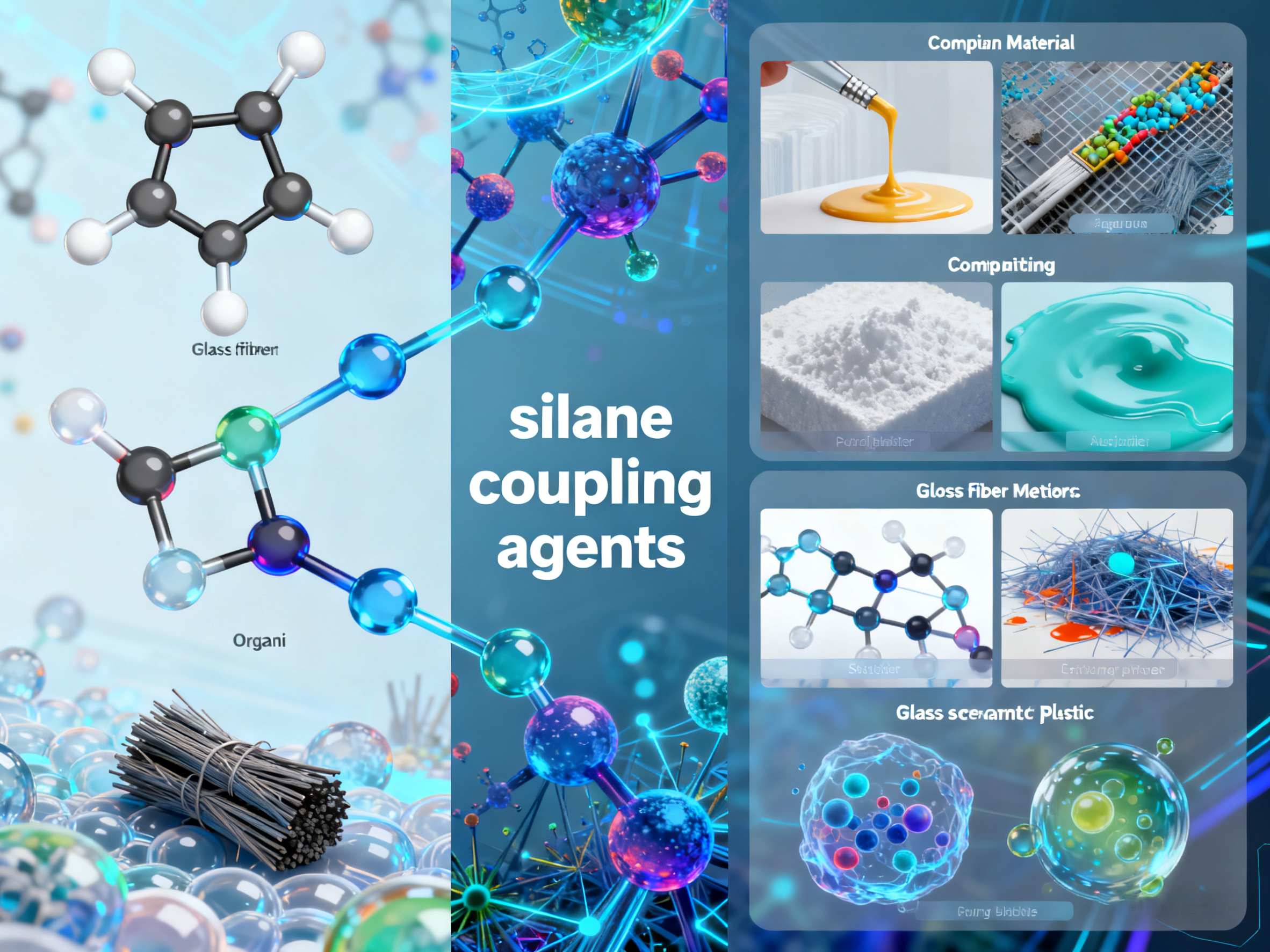
The cornerstone advantage of high quality silane coupling agents lies in their revolutionary dual-functionality bonding technology that creates molecular bridges between dissimilar materials with unprecedented strength and durability. This innovative approach addresses one of the most challenging aspects of modern manufacturing: achieving reliable adhesion between organic polymers and inorganic substrates. Traditional bonding methods often rely on mechanical interlocking or weak secondary forces that can fail under stress or environmental exposure. High quality silane coupling agents fundamentally change this dynamic by forming primary chemical bonds at the molecular level, creating interfaces that are often stronger than the bulk materials themselves. The dual-functionality mechanism operates through carefully engineered molecular architecture where silicon-based alkoxy groups hydrolyze in the presence of moisture to form reactive silanol groups. These silanol groups then condense with hydroxyl groups naturally present on inorganic surfaces, creating stable siloxane bonds that resist hydrolysis and thermal degradation. Simultaneously, the organic functional groups on the opposite end of the molecule form covalent bonds with polymer chains during curing or processing. This creates a continuous molecular pathway for stress transfer across the interface, eliminating the weak boundary layer that typically exists in mechanically bonded systems. The strength of this molecular bridge approach is evidenced by improved peel strength, shear resistance, and fatigue performance in real-world applications. Testing has demonstrated that properly treated interfaces can withstand over one million stress cycles without degradation, compared to several thousand cycles for untreated bonds. The technology also provides exceptional resistance to environmental factors including humidity, temperature cycling, and chemical exposure that commonly cause bond failure in critical applications. This dual-functionality approach enables manufacturers to achieve performance targets that were previously impossible, opening new possibilities for lightweight design and multi-material construction in industries ranging from automotive to aerospace.
Superior Environmental Resistance and Longevity

Superior Environmental Resistance and Longevity

High quality silane coupling agents deliver exceptional environmental resistance and longevity that significantly outperforms conventional bonding solutions, making them indispensable for applications exposed to harsh operating conditions. The molecular structure of these coupling agents creates inherently stable chemical bonds that maintain their integrity across extreme temperature ranges, humidity variations, and chemical exposure scenarios that would quickly degrade alternative bonding methods. This superior environmental resistance stems from the thermodynamically stable siloxane backbone formed during the coupling reaction, which exhibits remarkable resistance to hydrolysis even under prolonged exposure to moisture and elevated temperatures. Laboratory accelerated aging tests demonstrate that bonds formed with high quality silane coupling agents retain over 90 percent of their initial strength after 5000 hours of exposure to 85°C and 85 percent relative humidity, conditions that would cause complete failure in untreated systems within 500 hours. The chemical resistance properties extend to a broad range of industrial fluids including hydraulic oils, fuels, cleaning solvents, and aggressive chemicals commonly encountered in processing environments. This chemical inertness prevents the gradual degradation that often leads to unexpected failure in service, providing manufacturers and end users with confidence in long-term performance. UV radiation resistance is another critical advantage, as the coupling agents form bonds that do not suffer from photo-oxidation or chain scission when exposed to intense sunlight or artificial UV sources. This makes them particularly valuable for outdoor applications including architectural glazing, solar panel assemblies, and automotive exterior components. The longevity benefits translate directly into reduced maintenance costs and extended service intervals for equipment and structures. In marine environments, where salt spray and constant moisture exposure challenge even the most robust materials, high quality silane coupling agents maintain bond integrity for decades rather than the months or years typical of alternative solutions. This exceptional durability also supports sustainable design practices by enabling longer product lifecycles and reduced replacement frequency, contributing to environmental conservation and resource efficiency goals increasingly important to modern manufacturers and consumers.
Enhanced Processing Efficiency and Manufacturing Benefits

Enhanced Processing Efficiency and Manufacturing Benefits

High quality silane coupling agents revolutionize manufacturing efficiency by streamlining processing operations while simultaneously improving product quality and consistency across diverse production environments. These agents integrate seamlessly into existing manufacturing processes without requiring extensive equipment modifications or lengthy transition periods, making them highly attractive for manufacturers seeking immediate performance improvements. The processing benefits begin with improved wetting and dispersion characteristics that enable more uniform distribution of fillers, reinforcements, and additives throughout composite formulations. This enhanced dispersion translates to superior mechanical properties and reduced variability in finished products, allowing manufacturers to achieve tighter quality specifications with greater consistency. Processing temperatures can often be reduced when using high quality silane coupling agents, as their catalytic effect on polymer crosslinking accelerates cure rates and reduces energy requirements. This temperature reduction not only saves energy costs but also minimizes thermal stress on sensitive components and reduces the risk of dimensional distortion in precision applications. The improved flow characteristics of treated formulations enable better mold filling and reduced injection pressures in molding operations, extending tool life and reducing maintenance requirements. Quality control becomes more predictable and manageable with high quality silane coupling agents due to their consistent performance characteristics and well-established reaction kinetics. Manufacturers can implement statistical process control methods with greater confidence, knowing that the coupling agent performance will remain stable across production batches. This consistency reduces the need for extensive testing and rework, improving overall equipment effectiveness and throughput. The compatibility of these agents with automated application systems enables precise dosing and uniform coverage, supporting lean manufacturing initiatives and reducing material waste. Training requirements are minimized as the agents typically integrate with existing mixing and application equipment without requiring specialized handling procedures. The broad compatibility with various substrate materials and polymer systems allows manufacturers to standardize on a single coupling agent technology across multiple product lines, simplifying procurement, inventory management, and quality assurance protocols. This standardization benefit extends to reduced complexity in formulation development and faster time-to-market for new products, providing competitive advantages in rapidly evolving markets where speed and reliability are essential for success.

Get a Free Quote

Our representative will contact you soon.
Email
Name
Company Name
Message
0/1000